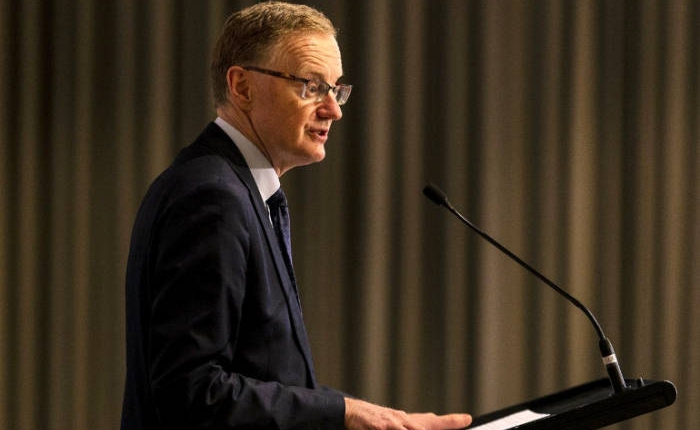
Fast-tracked tax cuts and wage subsidies for younger workers underline the Federal Government’s budget.

Introduction

It’s hard to image the year we have had, other than in a science fiction novel! The impacts of COVID-19 have reverberated in ways nobody could have predicted, with over 1,000,000 lives lost worldwide, and more to come until effective and safe treatments/vaccines can be developed and distributed.

The Morrison-Frydenberg Government’s plans for a budget surplus have disappeared in the huge deficit now incurred from the stimulus packages and fiscal policies (tax cuts) being rolled out in response to the impacts on the economy from this extraordinary pandemic event.

Market Volatility

Markets and Economic Recovery

Markets have seen the fastest decline and subsequent recovery in 100 years of market events. We are expecting to see continued low inflation (and low interest rates) for some time – possibly years – until economic growth, jobs and business activity kicks back in. It is likely this will be gradual. However, with the effects of very low interest rates (negative in many parts of the world) and the stimulus packages being delivered by central banks in a coordinated way, we do see a growth phase coming in the medium to longer term.

In the meantime, the US Presidential elections in November, the unwinding of JobKeeper/JobSeeker and the end of rent relief/bank loan holidays in March 2021 bring uncertainty. However, overall economic growth in Australia and around the world is set to move ahead. Ongoing technology advancements, infrastructure spending, health care and sustainable energy projects are likely to be key drivers to jobs and overall economic recovery.

Australia’s isolation and relatively low population density has allowed us to successfully control the spread of the virus. It is very pleasing to see the numbers of cases and deaths being brought under control, particularly in Melbourne where the population has been the worst affected. We wish to express our deepest sympathies to those people and families who are suffering through the devastating health affects and loss of life.

Morrison-Frydenberg

Summary of Budget Announcements

Personal tax cuts brought forward

  • Immediate tax relief: ‘Stage two’ personal income tax cuts will be brought forward two years, and backdated to 1 July 2020.
  • Raised tax brackets: The upper threshold of the 19% tax bracket will rise from $37,000 to $45,000 and the upper threshold of the 32.5% tax bracket will rise from $90,000 to $120,000. This will be worth the equivalent of $41 a week to those earning between $50,000 and $90,000 a year, and about $49 a week to those earning more than $120,000 a year (source: https://budget.gov.au/calculator/index.htm).
  • Boost for workers on lower incomes: Workers on lower incomes will gain from an extension of the Low and Middle Income Tax Offset for a further 12 months until 30 June 2021, and increase in the Low Income Tax Offset.

Support for pensioners, low income earners, welfare recipients and job-seekers

  • Two cash payments: Aged pensioners, carers, disability support and concession cardholders will receive two $250 payments. The payments will be made progressively from 30 November 2020 and early 2021.
  • Incentives for employers to hire: A JobMaker Hiring Credit will be paid for a year to businesses who hire an eligible unemployed worker aged 16 to 35. The rate will be $200 a week for people under 30 and $100 a week for people between 30 and 35, and they must work at least 20 hours a week. The JobMaker Hiring Credit is aimed at filling the gap when the JobKeeper scheme ends next March.
  • Support to businesses employing apprentices and trainees: A wage subsidy will reimburse eligible businesses up to 50% of a new apprentice or trainee’s wages. Subsidies are capped at $7,000 per quarter, per eligible apprentice or trainee, capped at 100,000 places

Your Future, Your Super package commencing 1 July 2021

Future Superannuation

  • Making it easier to choose a super fund: Super fund members will have access to a new interactive online comparison tool, YourSuper, aimed to encourage funds to compete harder for members’ savings.
  • Transparency around underperforming funds: To protect members from poor outcomes and encourage funds to lower costs, the Government will require superannuation products to meet an annual objective performance test. Those that fail will be required to inform members and refer members to the YourSuper comparison tool. Persistently underperforming products will be prevented from taking on new members.
  • Additional trustee obligations: Super fund trustees need to ensure decisions are made in the best financial interest of members and provide better information on management and expenditure.

Business tax changes

  • Immediate tax write-off: Businesses with annual turnover of up to $5 billion can write off the full cost of eligible capital assets acquired from 7 October 2020 and first used or installed for use by 30 June 2022.
  • Loss carry-back: Companies with aggregated annual turnover of less than $5 billion will be able to apply tax losses from the 2019-20, 2020-21 and 2021-22 income years against previously taxed profits from the 2018-19 and later tax years by claiming a refundable tax offset in the loss year.
  • Specific changes for small business: Small businesses with a turnover of up to $50 million will be able to access up to 10 tax breaks, with fringe benefits tax scrapped on car parking, phones or laptops, simpler trading stock rules and easier PAYG instalments.

First home buyers

First Time Home Buyers

  • Purchase cap lifted: Up to 10,000 more first home buyers will be able to get a loan to build a new home or buy a newly built home with a deposit of as little as 5% (source: https://budget.gov.au/2020-21/content/overview.htm). The purchase cap will also be lifted and varies depending on the State and regional area.

Please contact our office if you would like to discuss any of the above further.

Please stay safe and well.

Extension of JobKeeper

As the COVID-19 pandemic continues to affect employment in Australia, the Government has announced an extension of JobKeeper from 28 September 2020. From this date, the flat rate of JobKeeper will reduce, payment tiers will be introduced and ongoing turnover tests for businesses will be used to determine eligibility.

Legislation is necessary to support this measure with the next sitting of Parliament 24 August 2020.

Rate of JobKeeper

Currently, JobKeeper is a flat rate of $1,500 per fortnight. It will continue to be paid to eligible recipients at this rate until the original end date of 27 September 2020. However, the extension of JobKeeper until 28 March 2021 will have two rates. The new rates will be:

  • From 28 September 2020 – 3 January 2021:
    $1,200 per fortnight for those working 20 hours or more per week (on average)
    $750 per fortnight for those working less than 20 hours per week.
  •  From 4 January to 28 March 2021:
    $1,000 per fortnight for those working 20 hours or more per week (on average)
    $650 per fortnight for those working less than 20 hours per week.

Eligible employees are those who were working in the business in the four weeks before 1 March 2020 (i.e. February 2020). The ATO will be provided discretion on alternative tests to determine an employee’s hours during the test period where the employee may not have been working, such as being on leave due to bushfires. Guidance will also be provided where employees are not paid on a weekly or fortnightly basis. All other criteria to determine the eligibility of an employee is unchanged.

Businesses will need to continue to identify those employees that JobKeeper is being claimed for and this will be extended to nominating the relevant amount which is being claimed for each employee based on hours of work.

Turnover test

Businesses will need to show a continued decline in turnover to be eligible for the extension of the JobKeeper payment. The decline in turnover is:

  • 50% for businesses with aggregated turnover of more than $1 billion
  • 30% for business with aggregated turnover of $1 billion or less, or
  • 15% for Australian charities and not-for-profit commission-registered charities (excluding schools and universities).

The decline in turnover thresholds are unchanged, however, turnover assessment will be specifically measured at two points under the extension.

From 28 September 2020 to 3 January 2021, businesses will need to have a significant fall in actual GST turnover in the June and September 2020 quarters compared to the corresponding quarters in 2019.

From 4 January to 28 March 2021, businesses will need to have a significant fall in actual GST turnover in the June, September and December 2020 quarters compared to the corresponding quarters in 2019.

The ATO will have discretion to provide alternative methods to determined turnover including circumstances where it is not appropriate to compare actual turnover in 2020 with corresponding quarter in 2019. This is consistent with the current discretion provided to the ATO.

We will keep you posted as the changes to JobKeeper are tabled in Parliament (most likely remotely).

As usual, please contact our office if you have any questions.

Keeping you informed during the coronavirus pandemic.

We appreciate that you and your family are dealing with a significant amount of information relating to the global COVID-19 pandemic. As a highly valued client of Fintech Financial Services, we want to share with you important changes to Super and Account Based Pensions (Pensions), and keep you informed.

You will also find the latest updates from us on COVID-19 (Coronavirus) and investment markets on our website at www.fintech.com.au/news

Government measures announced on 22 March

Prime Minister & Treasurer

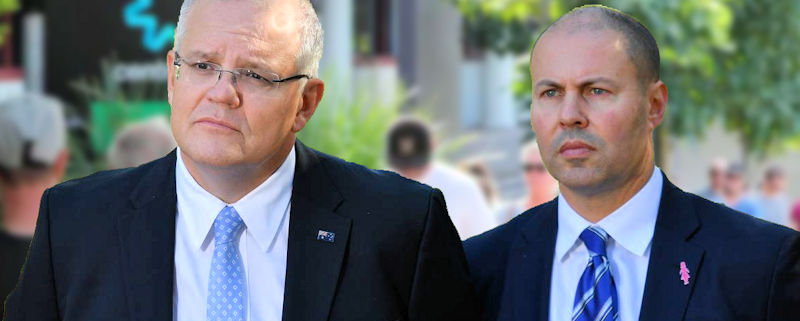
Two important changes to Super and Pensions were announced by the Prime Minister, Scott Morrison and the Federal Treasurer Josh Frydenberg on 22 March 2020. The measures provide temporary relief to those experiencing financial challenges due to the economic impacts relating to the containment of the Coronavirus. This is part of the Government’s Economic Response to the Coronavirus.

We believe that this response is a considered, pragmatic and caring move for a nation under stress. The announcement also reflects the strength of our superannuation system and the fact it was built for the well being and livelihoods of Australians.

The measures include:

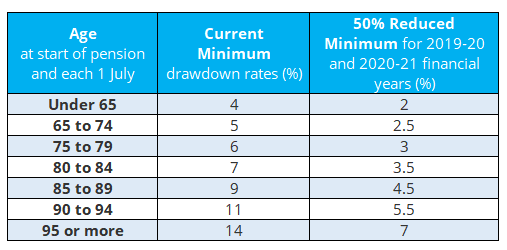
  • Reduced minimum Pension drawdown rates for retirees
    The Government is temporarily reducing minimum drawdown requirements for Pensions and similar products by 50% for the 2019-2020 and 2020-2021 financial years.
  • Temporary early access to Super
    Eligible individuals in extreme financial stress will be allowed early access to their Super of up to $10,000 before 1 July 2020, and up to a further $10,000 from 1 July 2020. Meaning, if eligible, you may be able to access up to $20,000 overall.

 1. Reduced minimum drawdown rates for retirees

Superannuation-Piggy

The reduction in the minimum drawdown by 50% will provide assistance if you wish to reduce the impact of drawing down on your Super during this time of market crisis and lower investment values. The measures will also assist those who have reduced expense needs during the ‘stay at home’ phase of the Coronavirus, or have access to other sources of cash and income from outside their Super Fund.

Of course for those still able to contribute to Super or who have cash available to invest, the high levels of market volatility are providing extremely attractive long term buying opportunities.

The reduced minimums are now available to everyone with an Account Based Pension, Allocated Pension, Transition To Retirement (TTR) Pension and Term Allocated Pension as per the table below.

Pension Table

Note: The above minimum withdrawal factors are indicative and subject to change by the ATO. The method for calculating the reduced minimum drawdown amount for market linked income streams or Term Allocated Pensions (TAPs) will be different. For more information go to .

Next steps / action required

Please contact our office by email to ad***@*********om.au or by calling us on telephone 07 3252 7665 if you would like to change your pension payments relating to the periods below:

NB: If you wish to maintain your current Pension arrangements ongoing, you need do nothing more.

a) From Now to 30 June 2020
If you have received monthly Pension payments throughout the financial year, you may wish to cease the remaining months of May and June 2020.

b) From 1 July 2020 to 30 June 2021
You also have the option to reduce your Pension drawdowns by up to 50% of the minimum relating to your Age for the period 1 July 2020 to 30 June 2021, as per the table above.

2. Application for early release of up to $10,000 from Superannuation available from 20 April 2020

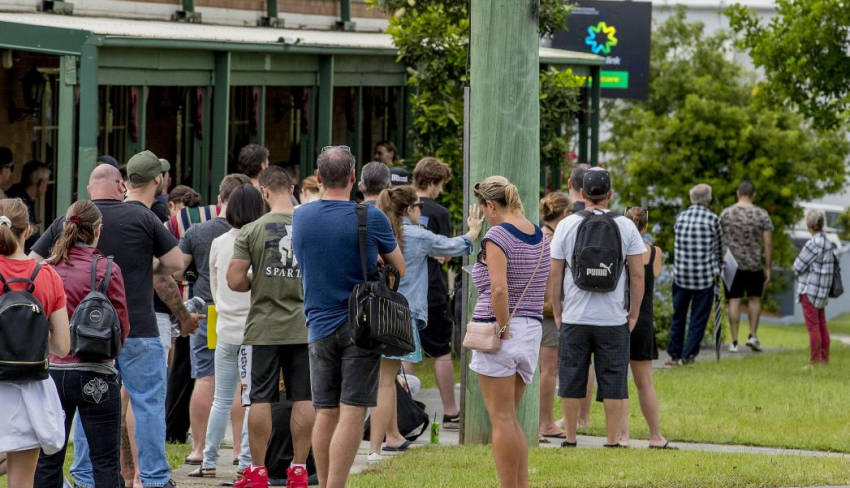
centrelink queue

The Government has also announced that individuals suffering from extreme financial stress will be allowed early withdrawal of up to $10,000 from their super on compassionate grounds, in each of the 2019-2020 and 2020-2021 financial years, subject to certain eligibility criteria.

For more details on eligibility or to apply for early release, please go to .

For anyone considering early withdrawal, there are a number of things to consider, including the impact on any insurance held in super, and the fact that withdrawing funds from super will reduce retirement savings.

We are here to provide the best possible advice and financial outcomes for you

Please contact us on 07 3252 7665 if you have any questions about any of the above.

For full details on the Australian Government’s Economic Response to the Coronavirus, visit.

Please take care of yourself and your family while the Coronavirus runs its course.

Further to my recent updates relating to the Coronavirus, you may feel like the sky is falling at the moment. It’s an anxious time, but I wanted to provide some reassurance and perspective.

  • We had positioned your portfolio defensively leading into this period of volatility. A focus on preserving capital remains very much top of Fintech’s mind at this time.
  • We have been through many instances of this type of market volatility in the past and while the catalyst for a sell off may be different each time, the way that humans respond in these situations is surprisingly consistent. We don’t like the feelings of uncertainty and anxiety, and we are more likely to sell our assets at any price, just to get rid of them so we no longer feel sick in the stomach. This is panic, not rational behaviour. Fintech believes that there is evidence of this irrational behaviour happening right now. When irrational investors reacted to markets overnight, selling was indiscriminate; very little was spared. Such is the panic among some investors at the moment.
  • While we don’t know how coronavirus will ultimately unfold, nor what the humanitarian and economic cost will be, the same investment process that Fintech applies for you in any other market conditions, typically works in these types of environments too. There is a high risk of further short term market volatility. However, we remain focused on identifying the long term buying opportunities that invariably arise when markets overshoot on the downside, due to investor fear and panic.
  • As one of the world’s most successful investors, Warren Buffet has famously quoted…
    • “Widespread fear is your friend as an investor because it serves up bargain purchases.”
    • “Whether we’re talking about socks or stocks, I like buying quality merchandise when it is marked down.”
    • “We simply attempt to be fearful when others are greedy and to be greedy only when others are fearful.”

Remember that selling out crystallises losses, making them permanent. I encourage you to watch this video from Daniel Needham, Chief Investment Officer at Morningstar WATCH HERE.

As always, please contact our office if you wish to discuss any of the above in relation to your situation.

Thank you,

Grant

Whether it’s social media, TV or radio, the coronavirus or COVID-19 is a topic we simply cannot escape. As much as we would like to try and ignore it, we can’t and it is having a significant impact on people and businesses in Australia.

We are already experiencing panic buying of essential goods around Australia and now we enter a scenario of potential social isolation.

As COVID-19 spreads, businesses need to face the possibility of mass absences from the workplace with quarantine measures enforced. As such it is vital that we implement a strategy, now, to see our business through the months ahead should we be faced with such a scenario. Even the Prime Minister of Canada, Justin Trudeau and his wife Sophie are not immune from this.

The team at Fintech have deployed measures should any of us become unwell or if we need to work from home or self-isolate. You can be confident that regardless, operations will continue without impact or interruption to you. Further updates will be provided to you should this scenario occur.

In addition, you may be aware that the Morrison Government have announced a $17.6b Stimulus Package.

The package is designed to support businesses in maintaining their employment levels rather than having to reduce their workforce.

Here is a summary of what has been announced so far:

  • Immediate asset write-off increased from $30,000 to $150,000
  • Eligible Employers can apply for a wage subsidy of 50% of the apprentice’s or trainee’s wage for up to 9 months (from 1 January 2020 to 30 September 2020)
  • Up to $25,000 (tax free) Boosting Cashflow for Employers of small and medium-sized businesses, with a minimum payment of $2,000 for eligible businesses
  • Households receiving a Government payment will receive $750 from 31 March 2020
    $1bn to the “Coronavirus fund”

We will share further news with you as it comes to hand.

We continue to take the long term view

Source ABS Fintech

Factors that should assist the Australian economy minimise any recession:

  • Rate cuts and tax cuts
  • Infrastructure spending booming
  • Low Australian Dollar
  • Improved mining investment
  • Scope for further fiscal stimulus
  • Continued population growth
  • Cyclical spending improvement following stimulus
Source: Bloomberg, Fintech

In conclusion

Right now, it is business as usual at Fintech.  However, we are highly conscious of your business and family needs and equally your own personal well-being. If you would prefer to conduct any meetings over electronic communication (such as Zoom, Skype, etc) or via video or phone conference facilities we can assist in this manner.

If you have any further questions, please contact us on 07 3252 7665.


The RBA announced its decision on interest rates as the coronavirus begins to impact the Australian economy

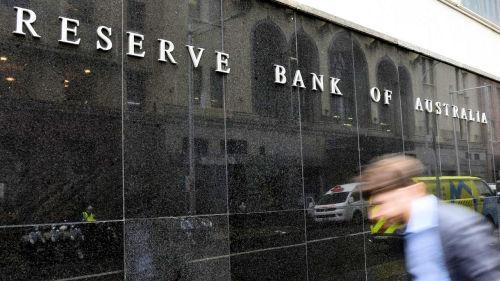
At its monthly board meeting on Tuesday 3 March 2020, the Reserve Bank of Australia (RBA) decided to cut the official cash rate by 0.25% to a new low of 0.50%. The Board took this decision to support the economy as it responds to the global Coronavirus outbreak, now classified as a pandemic by the Morrison Government. Today’s statement from the RBA Governor Philip Lowe has made clear the RBA’s intent to provide more stimulus to the Australian economy given the challenges being faced from the impact of drought, the recent bushfires and floods, and now the Coronavirus.

Stock market reacts positively to stimulus after run of declines

The Australian Stock Exchange (ASX) All Ordinaries Index ended up in positive territory after a week of declines, trading up 50.5 points to 6511.6 (at the close of trading on 3 March 2020) on the back of the stimulus from the RBA and very strong US and global markets overnight. Positive news came from a report that Beijing will be rolling out further stimulus, and the number of new virus cases in China had started to decline. However, the gains on the ASX moderated during the session after the RBA only opted for a 25 basis point (0.25%) rate cut, rather than the double-size 50 basis point (0.50%) slash that some in the business and finance community were calling for. The RBA has previously signalled that it would look to start a Quantitative Easing (QE) program if official rates were cut to the 0.25% level, so it appears they are keeping some powder dry on that front. The RBA will also be watching housing prices at this low level of interest rates, as they will not be wanting to over stimulate borrowing levels and prices in the property market.

The banking and finance sector dipped 0.9% as the big banks fell on expectation that the rate cut will squeeze lending profit margins further. Under pressure from the government, all of the big four banks agreed to pass along the full rate cut to customers. This is good news for individuals and businesses repaying loans on variable interest rate structures.

On the other hand, this places further downward pressure on the level of income being generated from Cash and Term Deposits. Retirees and others relying on this type of income to maintain their lifestyle and living expenses may be forced to tighten their belts or look for alternative sources of income. This increases the attractiveness of higher risk growth assets and shares as investors look for ways to earn higher levels of income from other sources, like shares paying dividends, property paying rents and infrastructure assets and mortgages paying income.

Financial advice & investment strategy the key for long term success

Once again, it is very important that your financial advice and investment strategies place you in the best position to meet your needs and aspirations in life over the longer term. Now more than ever, with the current market volatility around the Coronavirus, it is important to be holding and buying holdings in your portfolio that represent ‘fair valuation’ or better. Fintech Financial Services utilises the worlds leading research houses and investment managers to seek out these opportunities, and make the appropriate moves in a timely manner for you – in all market conditions. Doing this in conjunction with Fintech’s professional financial strategy advice that considers your personal needs, tax, structures, entities, income, levels of debt, areas of risk and wishes for you family – is what makes the most difference.

Read RBA Governor, Philip Lowe’s statement below:

The Coronavirus has clouded the near-term outlook for the global economy and means that global growth in the first half of 2020 will be lower than earlier expected. Prior to the outbreak, there were signs that the slowdown in the global economy that started in 2018 was coming to an end. It is too early to tell how persistent the effects of the Coronavirus will be and at what point the global economy will return to an improving path. Policy measures have been announced in several countries, including China, which will help support growth. Inflation remains low almost everywhere and unemployment rates are at multi-decade lows in many countries.

falling-dollar

Long-term government bond yields have fallen to record lows in many countries, including Australia. The Australian dollar has also depreciated further recently and is at its lowest level for many years. In most economies, including the United States, there is an expectation of further monetary stimulus over coming months. Financial markets have been volatile as market participants assess the risks associated with the Coronavirus. Australia’s financial markets are operating effectively and the Reserve Bank will ensure that the Australian financial system has sufficient liquidity.

The Coronavirus outbreak overseas is having a significant effect on the Australian economy at present, particularly in the education and travel sectors. The uncertainty that it is creating is also likely to affect domestic spending. As a result, GDP growth in the March quarter is likely to be noticeably weaker than earlier expected. Given the evolving situation, it is difficult to predict how large and long-lasting the effect will be. Once the Coronavirus is contained, the Australian economy is expected to return to an improving trend. This outlook is supported by the low level of interest rates, high levels of spending on infrastructure, the lower exchange rate, a positive outlook for the resources sector and expected recoveries in residential construction and household consumption. The Australian Government has also indicated that it will assist areas of the economy most affected by the Coronavirus.

The unemployment rate increased in January to 5.3 per cent and has been around 5¼ per cent since April last year. Wages growth remains subdued and is not expected to pick up for some time. A gradual lift in wages growth would be a welcome development and is needed for inflation to be sustainably within the 2-3 per cent target range.

There are further signs of a pick-up in established housing markets, with prices rising in most markets, in some cases quite strongly. Mortgage loan commitments have also picked up, although demand for credit by investors remains subdued. Mortgage rates are at record lows and there is strong competition for borrowers of high credit quality. Credit conditions for small and medium-sized businesses remain tight.

The global outbreak of the Coronavirus is expected to delay progress in Australia towards full employment and the inflation target. The Board therefore judged that it was appropriate to ease monetary policy further to provide additional support to employment and economic activity. It will continue to monitor developments closely and to assess the implications of the Coronavirus for the economy. The Board is prepared to ease monetary policy further to support the Australian economy.

Please contact Fintech Financial Services on 07 3252 7665 if you would like to discuss any of the above in relation to your specific circumstances.
Grant


Firstly, we wish for you and your families to remain safe and healthy as the Covid-19 (Coronavirus) runs it course. What began in December 2019 with a handful of mysterious illnesses in the central Chinese mega-city of Wuhan has travelled to other parts of the world, jumping from animals to humans and infecting close to 90,000 people to date. It has triggered unprecedented quarantines in China and a string of countries have now closed borders with Italy and Iran (including Australia) given the spread of the virus there. South Korea has delayed the start of its school year amid a spike in cases, and there is a possibility that the Olympics in Japan will not proceed as planned. This is effecting global supply chains and is causing fear in investment markets in the short term.

Most cases of the virus are mild, but health officials say its spread around the globe may be inevitable. From a non-financial point of view, it appears that frequent and proper washing our hands with soap is one of the simple things we can all do to reduce the chances of contracting or communicating the illness.

In addition to the life threatening public health crisis, Coronavirus is also posing an economic and market threat. Globally and in Australia, we have experienced a sell-off in investment markets in excess of 10% (technically known as a ‘correction’) as investors react to the growing numbers of Coronavirus outbreaks.

First quarter GDP could be negative, both in Australia and globally

March 2020 quarter Gross Domestic Product (GDP) growth is likely to be negative, possibly leading to a stalling or even decline in the global economy. However, it should prove short lived.

With many Chinese staying at home as confirmed by various indicators around transport congestion, coal consumption and property sales, the hit to Chinese growth and the flow on to the global growth will be big this quarter. It’s possible that global growth will be zero in the March quarter or may even contract. Rough estimates suggest that 30% of China’s population and 50% of its GDP is under lock-down and each week this remains the case will knock 1% off Chinese annual GDP and nearly 0.2% directly off global GDP. However, if the outbreak is contained in the next month or so as we expect then growth will bounce back in the June quarter and share markets will largely look through it, albeit with the high risk of further short term volatility.

For Australia, we see the combination of the drag from the bushfires and coronavirus detracting around 0.6% from 2020 March quarter GDP which will see the economy go backwards by around -0.1%. However, growth is expected to rebound in the June quarter as the rebuilding from the bushfires kicks in and if as we expect the Covid-19 outbreak is soon contained. There is a lot of uncertainty around all of this though and its come at a time that the economy was already weak with high levels of spare capacity leaving the Reserve bank of Australia (RBA) a long way from meeting its growth and inflation objectives, so we continue to see further interest rate cuts (monetary easing) from the RBA in the months ahead and a stepped up fiscal stimulus (tax cuts) in the 2020 May budget.

Please rest assured that Fintech Financial Services is reviewing the situation closely with our specialist investment managers to ensure your long term portfolio objectives are maintained. Times of concern and crisis requires rational thinking and a disciplined approach to stay on track – not only to address any short term impacts – but to take advantage of the long term opportunities that unfold as investment markets react with fear and panic. We will keep you up to date as the situation evolves. For now, stay calm and don’t let the barrage of news and media updates about the Coronavirus cause you too much concern.

The sensible long term view

In six months’ time, we believe that we will be looking back at the coronavirus, mourning its victims and at the same time marvelling at the resilience of markets. History may be no judge of future performance but in this case it is a reminder of how past outbreaks have left a shallow impression on markets.

From the Severe Acute Respiratory Syndrome (SARS) outbreak in 2003 to the twin strikes of Ebola in 2014 and 2016, and a bout of Zika in between, disease has made headlines and jostled markets. However, each time the outbreaks and the financial losses were eventually contained. “Market participants tend to react to such unforeseen outbreaks,” says Morningstar Investment Management’s Carolyn Szaflik, “but markets tend to recover by the six-month mark. This suggests that sentiment drives early losses, but sustained economic impacts are likely to be less than investors fear at the onset.”

How markets have reacted to previous outbreaks

From SARS to Ebola: market immunity

Since 1998 there have been nine global epidemics but little evidence linking them to long-term fundamentals. For investors, that means avoiding the hysteria and focusing on the factors that make businesses worth investing in.

Exhibit 1: Investors tend to react to epidemics, but the long-term picture is positive


A key consideration for the moment is the potential effect of coronavirus on the cash flows of affected businesses. Empty streets in China, fewer flights, fewer customers, less turnover, and crucially, a hit to global supply chains will cause a drop in the output for the world’s largest economy (China). The damage will emerge in future earnings reports.

Exhibit 2: Market reaction to global epidemics

That said, “it’s not necessarily a trigger to dump stocks, crystallise losses and seek refuge in cash,” says Szaflik. Share prices may have dropped but China is on the case. Its stimulus measures have curbed the losses and the country’s central bank is set to lower the lending rate and relax rules around how much money banks have to keep in reserve.

So what to do?

Economist John Maynard Keynes said it best in the following quote “When the facts change, I change my mind. What do you do, sir?” It’s a bit like that now. Watch and wait. If we were to see a clear and significant potential impact to investment fundamentals, we will carefully study the situation, conduct rigorous scenario analysis, and incorporate the new information into our portfolios. We certainly won’t be hitting the panic button and recommend that you don’t either.


In summary

In summary, a cautious approach is warranted in the near term until greater confidence is reached that the number of new cases of Coronavirus has peaked, seeing economic activity rebounding again. Fintech Financial Services is committed to utilising the market leading research providers and investment managers in the market to not only mitigate risk in your portfolios, but look for opportunities to position for the eventual rebound in hard hit emerging markets and Chinese shares, commodities, resources and travel stocks. Buying opportunities are also presenting themselves in the more resilient US, European and Australian share markets.

Stay calm and we will keep you up to date with how things are progressing.

Grant

The Reserve Bank of Australia (RBA) has left the official interest rates on hold at it’s first meeting for 2020 today.Reserve Bank of Australia

The cash rate decision comes at a time when the bushfire emergency and coronavirus outbreak weighs heavily on the Australian economy.

Improved employment data likely buoying the reserve bank’s outlook, even though economic growth has remained subdued.

This means the cash rate remains at 0.75% for the time being. As we have previously outlined, the cash rate is likely to remain “lower for longer” as inflation around the world has remained at stubbornly low levels.

Fintech Financial Services believes that it is unlikely that this will be the end of the RBA’s successive cuts (0.25% cut in the months of June, July and October 2019). Prior to October last year the RBA held the official cash rate at 1.50% for 30 consecutive months. The recent natural disasters, including droughts, floods and bushfires and the economic ramifications of the coronavirus outbreak make another cut in the near future likely.

With the economy a long way from the RBA’s full employment and inflation objectives, the bushfires likely to slow growth in the short term and the China coronavirus posing a new threat to global growth and tourist arrivals, the RBA had many reasons to cut rates at today’s meeting.

Going forward, the RBA is also likely to be considering the impact that another cut could have on consumer confidence, which has been down; given that the general public can perceive this as a message that the economy is going badly and we are in for tough times ahead. However, this is more due to the bank’s inability to communicate its intent.

Deloitte signageDeloitte Access Economics reported in their Business Outlook in January that there’s a large gap between what the RBA is saying, and what families and businesses are hearing. The RBA is boosting the economy both because it is weaker and because it is different. The first factor on its own is a concern for families and businesses, but the second, a different economy with more profits and more jobs – but less in terms of wages growth – is actually a mixed blessing.

If the next rate cut occurs as expected, it will bring the official rate cash rate to 0.50%, just a single cut from the point where RBA Governor Philip Lowe has said he would consider instituting a Quantitative Easing program (printing money). With the Australian economy now beset on all sides, it seems likely that there will be another cut soon.

This means that those holding Cash at bank or in Term Deposits to generate income, are going to find it even harder to maintain their income needs and lifestyles as a consequence.

This also means that investors will continue to look for ways to earn higher levels of income from other sources like dividends from Shares, rents from Property & Infrastructure and returns from higher risk Mortgages and Debt Instruments like unsecured Corporate Bonds. These assets class types have been pushed higher over the past 2 to 3 years as sustained low interest rates have created a ‘yield chase’ scenario. Some of these investment types are looking fully value or sitting above fair value as a result.

Therefore, it is very important for your portfolios, not only to be in line with your ‘Investment Risk Profile‘ and the reasons / objectives why you are investing, but to be made up of individual investments that represent ‘fair valuation’ or better, and utilise the leading investment research houses to deliver this to clients.

Please contact us if you would like to discuss this in relation to your specific circumstances.
Grant

Protect Your Super Package Banner

The superannuation and insurance sectors – along with the financial services industry in general – have been the focus of intense scrutiny in recent times.

Two catalysts for this have been the Productivity Commission’s review into superannuation, which assessed the efficiency and competitiveness of Australia’s super system, and the well-publicised Financial Services Royal Commission, which put a spotlight on misconduct in the superannuation, banking and financial services industry.

The findings of both emphasised the need for consumers to be better protected, particularly when it comes to Australians with low balances or those whose super accounts have become inactive.

Please click on the following link to view APRA’s Frequently Asked Questions relating to the “Protecting your super package” .

The recent passage through Parliament of “Treasury Laws Amendment (Protecting Your Superannuation Package) Act 2019” requires all Registerable Superannuation Entity (RSE) Licensees to implement a number of reforms to address account erosion of balances due to excessive fees or unnecessary insurance from 1 July 2019.

This change is part of the Protecting Your Super Package that was announced in the 2018-19 Federal Budget prior to the Federal Election. For more detailed information on the budget read our Federal Budget Analysis: https//www.fintech.com.au/fintech-2019-federal-budget-analysis/

Protecting Your Super package

A change that came into effect on 1 July 2019 is the Protecting Your Super (PYS) package. This package of reforms is designed to protect superannuation accounts from unnecessary erosion caused by insurance premiums and particular fees.

Here’s a snapshot of the PYS changes that are now in effect:

  • Super accounts with balances under $6,000 that are inactive – i.e. they have not received any contributions, rollovers or other transactions for 16 consecutive months – will be closed.  The funds will be sent to the Australian Taxation Office (ATO), to allow it to consolidate them with a member’s active account.
  • There is now an annual cap of 3% of the account balance on investment and administration fees, for all accounts with balances less than $6,000.
  • Exit fees are now banned, meaning super funds can no longer charge you a fee for moving all or part of your money to a different fund.
  • Super accounts with insurance and that are inactive for 16 months will have their insurance cancelled.

Steps to consider taking

If you have an inactive super account with insurance, think about whether you want to keep it. For example, some people may want to maintain a small super balance to cover insurance premiums, while others may simply be paying for something they no longer want or didn’t realise they had. If you do want insurance as part of your super, then it’s important not to let it lapse, unless you have other insurance arrangements in place.

It could also be a good idea to take a look at the fees that apply to your super fund. It’s possible that your provider may already charge you less than 3% in investment and administration fees, along with no exit fees. Other providers may charge account-based fees, so look at where you may be paying duplicate fees.

If you have an inactive account and want to keep things as they are (keep your insurance and/or keep your low-balance super account), you can:

  • Reactivate your super account, for example by paying money into it.
  • Notify your super fund that you want to opt in to keep your insurance, or opt out of consolidating your low-balance super account.

Improved superannuation contribution eligibility rules from 1 July 2020

In April 2019 the Treasurer, The Hon Josh Frydenberg also announced that the Government will improve a number of superannuation contribution eligibility rules from 1 July 2020.

The changes include:

  • Allowing individuals to make voluntary ‘Concessional’ and ‘Non-Concessional’ Contributions to superannuation up to age 66 without having to meet the work test;
  • Extending the age limit for ‘Spouse Contributions’ from 69 to 74;
  • Extending the age limit for the ‘2 Year Bring-Forward’ arrangements for Non-Concessional Contributions from 64 to 66.

Please note, these proposals are not yet law and any changes will require legislation to be passed by Parliament.

Please contact the Fintech Financial Services office if you have any questions about how these changes affect your personal circumstances.

Summary of key findings:

  • The proposed changes to franking credit rules, if legislated, will have a minimal influence on Australian share market volatility.
  • Investor impacts will vary, with Self Managed Super Fund (SMSF) investors in the tax-free retirement phase the most impacted. The loss of value will be most pronounced for those individuals not paying tax, and who are ineligible to receive the Age Pension.
  • Superannuation investors holding diversified portfolios in accumulation phase will be little affected.
  • If the proposed changes are passed, impacted clients can review investment strategies, improve portfolio diversification and focus on the total return of their portfolios, rather than relying solely on Australian share income returns to meet goals in the future.

Background

The changes to franking credits proposed by the Labor government have escalated as a prime cause for concern among Australian investors. This update addresses the likelihood of the changes coming into effect, and if passed, the implications for Australian savers and retirees, both in terms of impacts to market volatility, as well as portfolio strategy.

At this point, a few days out from a federal election, there is no guarantee that Labor will win government, though current polls indicate a likely victory which elevates the franking credit discussion to something more than just an academic exercise.

Should Labor win government, the Bill would also need to be passed into law. While a minority Senate may present some challenges, the clear policy stance presented by the Labor Party would create a reasonably strong mandate for the Senate to enact the changes into law.

  1. Labor’s current proposal

The Labor Party is proposing to roll back the treatment of franking credits to the rule that was in place prior to July 1 2000, making franking credits non-refundable. This would mean that investors on a low tax rate, or non-tax payers, may lose part or all of the franking credits. To protect low income earners, an exemption for individuals eligible for certain government support programs such as the Age Pension, Newstart and others has been proposed. Other exemptions apply, such as for SMSF’s where at least one member was a recipient of a government pension or allowance at 28 March 2019.

In order for individuals to continue to benefit from the full value of the franking credits received, the level of taxable income would need to equal or exceed the value of franking credits. Any excess franking, which would currently result in a refund from the Australian Tax Office, would be foregone.

  1. The impacts of the change are not borne equally

Franking credits are intended to have the effect of removing double taxation on company earnings. At present franking credits are earned when an Australian company generates earnings from its Australian operations and has paid tax on those earnings. For ease of explanation in this update we have assumed that the Australian company tax rate is 30%. For investors with an income tax liability that exceeds the value of the franking credits received, there will be no lost benefit. For investors with a tax liability that is less than the value of franking credits held, a portion of the benefit will be foregone.

The loss of value will be most pronounced for those individuals not paying tax, and who are ineligible to receive the Age Pension.

An interpretation of lost benefit cannot be derived by simply comparing an individual’s marginal tax rate with the company tax rate. For example, it would be false to assume that in all cases an individual with superannuation in the accumulation phase, during which time a tax rate of 15% applies, would lose half of the benefit. There are scenarios where this might be the case, however, the franking credits offset the individual’s income tax liability regardless of whether the tax liability is the result of income and capital gains generated from holdings in Australian shares or other parts of the portfolio.

Consider the following example: An individual holds an accumulation phase superannuation account invested across a mix of Australian shares, global shares and bonds. If we assume a 70% allocation to shares and a 30% allocation to bonds, and within the allocation to shares we assume 50% is held in Australian shares and 50% in global shares. Within the Australian shares allocation not all locally domiciled companies generate earnings from Australian operations, and not all earnings have had tax paid. The “franking level” of dividends paid by listed Australian companies is approximately 70%.

Taking the income yield from shares and bonds for the 2018 financial year would result in a yield of 2.5% on bonds, 4.3% on Australian shares (pre-franking) and 2.7% on global shares. The portfolio yield is 3.2%, which creates a tax liability of 0.48%. The value of the franking credits at the portfolio level equate to 0.45% resulting in a tax liability of just 0.03% of the value of the portfolio. Therefore, for superannuation investors in the accumulation phase, who are holding a well-diversified portfolio, there is little to worry about. The assumption that half the current value of franking credits could be lost, is ill-considered.

However, for self-funded retirees paying zero tax, the impact of the changes is more pronounced, with the value of the franking credits foregone, resulting in a loss of approximately 0.45% of portfolio value annually under the scenario of an investor with 70% growth assets and 50% Australian equity home bias. The impact would be even higher in the case of a less diversified portfolio with a higher exposure to Australian equities. For a retiree holding their entire portfolio in fully franked financials stocks, the impact, based on a pre-tax yield of 5.6% and a franking level of 100%, could be as much as 2.4% in lost franking credits. This extreme example also serves to highlight another important point, regarding the unintended risks stemming from highly concentrated portfolio positions.

Labor’s proposal also creates a potential inequity in the impact of the change between pensions taken from SMSF’s versus from large pooled funds. This stems from the ability of larger funds to still give their (tax-exempt) pensioners the benefit of franking credit refunds via their unit price returns because tax is levied at the total fund level, not the particular product or member level. The extent of this disparity remains to be seen and may be subject to each fund’s pricing policy and the makeup of their member base between accumulation and post-retirement members.

  1. Addressing concerns for Fintech clients

The proposed changes have generated some common questions from our clients which are worth addressing. For example:

  • Should Fintech’s Investment Management Committee substitute Australian shares for other high yielding assets to make up for the loss of franking credits?
  • Will the change to franking credit rules result in heightened share market volatility?

a. Substituting Australian shares for other high yielding assets

The question of what can be done to “make up” the loss of yield from a change to the franking credit rules raises a broader question about the investment strategy being pursued and the goal that the strategy has been designed to support. Often, this question is attached to an income-oriented investment approach, whereby an investor seeks to meet their spending requirements from the natural yield of an Australian equity portfolio.

This behavioural tendency is understandable considering many investors spend their working lives trying to achieve a “savings target” that will support their goals in retirement. As a result, once retired, investors are often psychologically averse to spending from the portfolio in an amount that would make their balance drop. Understandably, the result is that many retirees are drawn toward an income-focused approach without realising the possible negative implications.

An excessive emphasis on yield can result in unintended risks. This could result from substituting investment grade bonds for high yield credit, or, sacrificing broad diversification for allocations to single countries, sectors or even stocks in a desire to chase yield.

A further consequence is that an income-oriented approach pays too little attention to the capital base, which can result in the portfolio being eroded by inflation and failing to last the duration, or that a retiree underspends from their portfolio and lives an unnecessarily frugal retirement.

Instead of constructing the portfolio to only align income yield with spending requirements, a total return approach aligns the portfolio’s asset allocation with the investor’s Investment Risk Profile and spending goals. This is the approach recommends to keep clients portfolio well diversified across asset classes and focused on the overall, or total, return. Where the need for additional income occurs over and above the yield generated by this broadly diversified portfolio, the investor spends the amount made from the overall portfolio, or the total return, rather than switching around holdings to generate additional yield.

b. Implications for share market volatility

A further concern voiced by investors is whether the change to franking credit rules could contribute to share market volatility as investors re-price the value of Australian equities under a new set of rules.

While impossible to reliably quantify, the changes to franking credit rules are likely to have a modest impact on share market volatility. Removing the franking credit refund will have a minimal impact on most investors. The key impact will be on zero tax paying investors who are not subject to the exemption. Larger superannuation funds will continue to receive a portion of the franking credit refund, which will vary depending on the level of tax paid relative to the value of the fund’s franking credits. Generally speaking, funds with concentrated exposures to Australian shares will have more franking credits in proportion to their overall tax liability and will be at greater risk of losing a portion of the benefit. This will likely lead to some re-weighting to other asset classes to balance out the level of franking with the tax liabilities of the fund.

As is often the case though, equity valuations, macroeconomic and geopolitical events both locally and globally are likely to have an outsized impact on share-market volatility compared to the changes to franking credit rules.

  1. What will Fintech do?

The low likelihood of a serious market correction as a direct result of what is still just a proposal, means that Fintech sees no need to rush a decision to change portfolio settings and incur unnecessary transaction costs.

If Labor win the election and the changes are legislated, revisiting goals and personal circumstances to judge the effect of the change is a critical first step. It is important that Fintech clients understand, and not overstate, the potential impact. For clients invested in Fintech’s well-diversified portfolios in the accumulation phase, or for savings outside the superannuation system, it is likely that the overall impact on your investment strategy will be negligible.

For self-funded retirees paying zero tax, the implications for portfolio positioning will depend on the starting point. For client’s holding portfolios with concentrated exposures to Australian equities, the opportunity exists to review their goals and improve the mix of diversification.

By focusing on the entire return earned by the portfolio, rather than just the income yield, a total return approach maintains your portfolio’s diversification and allows for better alignment with investment goals. It also provides more control over the size and frequency of withdrawals.

To discuss any of the above further in relation to your specific circumstances, contact Grant Chapman on telephone (07) 3252 7665.